Blog

  • The Summer Heatwaves – More Reasons to go Vegan

    The Summer Heatwaves – More Reasons to go Vegan

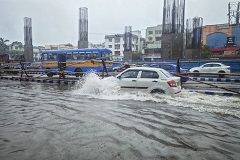
    Last month the UK temperature reached a record high for June of 37.7C. Living in the South East of England I experienced temperatures of 34C and the combined heat and humidity was certainly a challenge.

    Already in July temperatures have passed 30C.

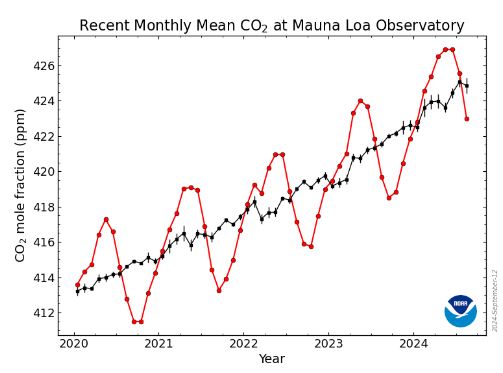
    Climate scientists are clear that the increasing frequency and intensity of these heatwaves is caused by the rising concentration of Greenhouse Gases (GHG) such as Carbon Dioxide and Methane in the atmosphere. [1]

    We often hear the phrase, “Get used to the New Normal”. Unfortunately this is a false hope. The truth is that the recent heat wave is merely a step to dangerous even hotter temperatures. [2]

    Instead of the New Normal, do we need to get used to the No Normal? An alarming prospect for anyone who thinks about it.

    But it doesn’t have to be this way. There are still choices that can be made by individuals and governments. And this is where taking up a plant based diet can make a difference. Vegan diets reduce the GHG emissions pollution which cause Global Heating. They also address other crises which contribute to the Polycrisis facing humanity [3].

    Plant based diets will not be a magic wand to solve the climate crisis. There is no magic wand. The burning of fossil fuels is the primary source of GHG emissions, but plant based diets must also be taken up on a large scale to have any chance of fixing this crisis

    Here are ten ways that a vegan diet addresses the causes and effects of climate change

    1. Reduces Carbon Dioxide Greenhouse gas emissions
    2. Reduces Methane Greenhouse gas emissions
    3. Increases Reforestation
    4. Increases Biodiversity
    5. Improves Fresh Water quality
    6. Improves Food Security
    7. Improves Individual Health
    8. Benefits Community Health
    9. Improves Animal Welfare
    10. Tackles the Polycrisis

    If taking a single action could make a difference in just one of these areas, it would already be worthwhile. What is remarkable is that shifting towards a more plant-based diet has the potential to positively influence all ten

    Why does that matter? Think about the things you value most. Your favourite sport. Holidays and travel. Your work. A cool, comfortable place to study. A pleasant home. A peaceful walk through the countryside. Climate change is already affecting all of these.

    The simple step of including more plant-based foods into our diet is one of the most accessible and effective steps many of us can take to help these things continue as we know them, and to protect the world for future generations.

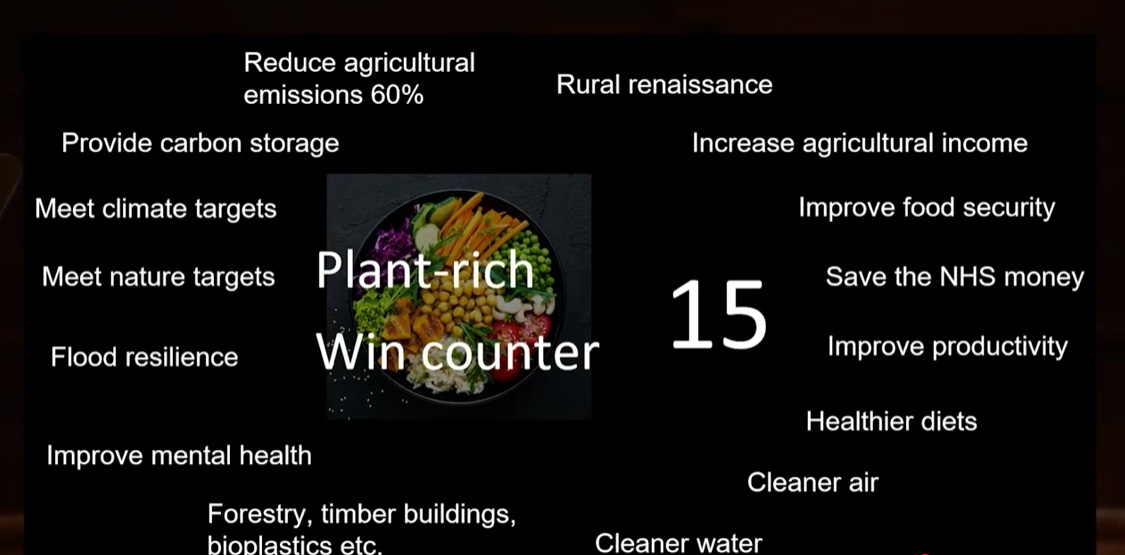
    And, of course, there are many more reasons to take up plant-based diets. At the National Emergency Briefing, Professor Paul Behrens presented a slide showing 15 wins for a plant-rich diet [4]

    References

    [1] https://theconversation.com/europe-is-battling-a-record-breaking-heatwave-whats-making-it-so-severe-286019

    [2] https://www.bbc.co.uk/news/articles/c8e2j0j87reo

    ‘Hotter and hotter and hotter’ – Europe’s new climate in seven charts
    4th July 2026

    [3] https://www.veganpieces.org/climate/a-climate-of-truth-book-extract/

    [4a] https://www.youtube.com/watch?v=jvjJ8Ag0-z0

    Youtube presentation by Paul Behrens

    [4b] https://www.veganpieces.org/climate/the-national-emergency-briefing-food-security/

  • The National Emergency Briefing – Food Security

    The National Emergency Briefing – Food Security

    The National Emergency Briefing on the Climate and Nature Crisis was held in Westminster, London, UK on 27th November

    Ten of the UK’s leading experts briefed an audience of around 1,250 politicians and leaders from business, culture, faith, sport and the media with the latest implications for health, food, national security and the economy [1]

    As part of the Briefing, Professor Paul Behrens spoke on Food Security, during which he highlighted the role of Plant Rich Diets in addressing the Climate Crisis

    The presentation can be found here [2]

    Links to all briefings can be found here [3]

    References

    [1] https://www.nebriefing.org/

    [2] https://www.youtube.com/watch?v=jvjJ8Ag0-z0

    The featured image in this post is taken from a slide shown during the presentation

    [3] https://www.youtube.com/@nebriefing

  • The 2025 State of the Climate Report : a Planet on the Brink

    The 2025 State of the Climate Report : a Planet on the Brink

    The 2025 state of the climate report, published last week, paints a bleak picture of the state of the Earth and its capacity to support life and human society as we know it [1]

    This report by leading climate scientists is stark from the first sentence:

    “We are hurtling toward climate chaos. The planet’s vital signs are flashing red. The consequences of human-driven alterations of the climate are no longer future threats but are here now”

    “Recent developments … mark the beginning of a grim new chapter for life on Earth”

    The report is aimed at “fellow scientists, policymakers, and humanity at large”

    But we live in times where experts are undermined and dismissed. Do we listen to the siren calls of global heating deniers and fossil fuel interests or to the consensus of thousands of scientists who have spent their careers analysing global satellite, earth science and weather data and can see the trends? I know who I would believe.

    The message is loud and clear. Change direction now. It’s too late to avoid consequences, but not too late to avoid the worst.

    The report highlights various climate records which were reached in 2024:

    • Global surface temperature
    • Population and livestock numbers
    • Meat consumption
    • Fossil fuel energy consumption
    • Atmospheric carbon dioxide
    • Global fire-related tree cover loss
    • Ocean heat content
    • The largest coral bleaching event ever recorded
    • Greenland and Antarctic ice mass are at record lows
    • Deadly and costly disasters surged

    On the positive side

    • Combined solar and wind consumption also set a new record but was 31 times lower than fossil fuel energy consumption
    • Climate change mitigation strategies are available
    • Social tipping points can drive rapid change

    But the risks are serious and wide-ranging

    • Loss of biodiversity
    • Shutdown of the Atlantic meridional overturning circulation (Even with global warming, the UK could freeze to -19C extremes in winter) [2]
    • Loss of available freshwater
    • Earth on a Hothouse trajectory
    • Global temperatures more than 3°C above preindustrial levels by 2100
    • Devastating impacts on natural systems and humanity

    Implications for Diet and Meat Consumption

    There are several primary causes of climate chaos mentioned in the report. All of them need to be addressed. This Piece will focus on livestock farming particularly for beef and lamb consumption (ruminants).

    It may seem surprising that a traditional and globally popular food should cause so much damage and contribute to a threat to human civilisation.

    The report gives more detail

    “Ruminant livestock and per capita meat consumption are at all-time highs, as of 2023”

    “Ruminant livestock methane emissions account for roughly half of all agricultural greenhouse gas emissions” [3]

    500,000 ruminants are added to the global numbers weekly

    Although not mentioned, pig and chicken production is also a cause of climate heating because of the deforestation caused when land is cleared to grow animal feed

    One way to deal with this is to change our diets

    “Climate change mitigation strategies are available, cost effective, and urgently needed. From forest protection and renewables to plant-rich diets, we can still limit warming if we act boldly and quickly … while offering many benefits related to human health, food security, and biodiversity” [4]

    The report then goes on to make an astonishing claim about the magnitude of the benefits gained by moving to plant-rich diets:

    The potential reduction in green house gas emissions associated with dietary changes may be on the order of 0.7–8.0 billion tonnes of CO2 equivalent per year by 2050” [5]

    20% of annual green house gas emissions reduced by 2050!

    The large range of values is given because of uncertainties in the level of future dietary change and how the released land is used. With a global transition to vegan diets and reforestation of freed land then the upper value of 8 GtCO2eq per year could potentially be achieved;

    This shows the importance of plant-based diets as a tool to halt climate chaos

    Options

    To say, “I cannot give up beef” is no longer a serious option

    To take up a varied and nutritious plant-based diet is good for the environment, health, for biodiversity and wildlife, and for the animals no longer farmed

    That is the option for a healthy planet

    References

    [1] https://doi.org/10.1093/biosci/biaf149
    The 2025 state of the climate report: a planet on the brink
    William J Ripple, Christopher Wolf, Michael E Mann, Johan Rockström, Emily Shuckburgh and others, 29th October 2025

    [2] https://www.carbonbrief.org/ocean-current-collapse-could-trigger-profound-cooling-in-northern-europe-even-with-global-warming/

    [3a] Report, Page 1

    [3b] https://openknowledge.fao.org/items/b3f21d6d-bd6d-4e66-b8ca-63ce376560b5

    Food and Agriculture Organization of the United Nations. 2023. Pathways towards Lower Emissions: A Global Assessment of the Greenhouse Gas Emissions and Mitigation Options from Live-stock Agrifood Systems.

    [4] Report, Key Highlights, Page 2, box 1

    [5] Report, Climate change mitigation strategies, page 5

  • The EAT-Lancet Planetary Health Diet 2025

    The EAT-Lancet Planetary Health Diet 2025

    Introduction

    In 2019 the general medical journal, The Lancet, set up the EAT-Lancet Commission to address the need to feed a growing global population a healthy diet while also maintaining sustainable food systems that will minimise damage to our planet. The result was the Planetary Health Diet (PHD), a set of policies, strategies and guidelines (note, not a collection of recipes and menus)

    On 2nd October this year the commission published an update [1]

    As in the earlier 2019 report this recommends a healthy diet consisting of a large proportion of whole grains, fruits, vegetables, nuts, legumes and plant-based products

    The report does not propose a vegan diet. As a result the PHD includes meat, fish and dairy supplying 12% of daily calories (Table 1)

    However, most of the principles laid out in the PHD can be applied to vegan diets.

    The report is primarily for scientists, policy makers and the food industry, but consumers will also find a great deal of useful information to help guide dietary choices

    This Piece gives a few comments on the Planetary Health Diet from a vegan point of view; it does not attempt to look at every section in the report.

    The report is based on 11 global food system models, analysing a range of scenarios between Business As Usual (BAU) and wholesale takeup of the PHD. There are some differences between the assumptions underlying each model giving differing conclusions in some areas, but the combination provides very useful information on possible outcomes.

    Goals

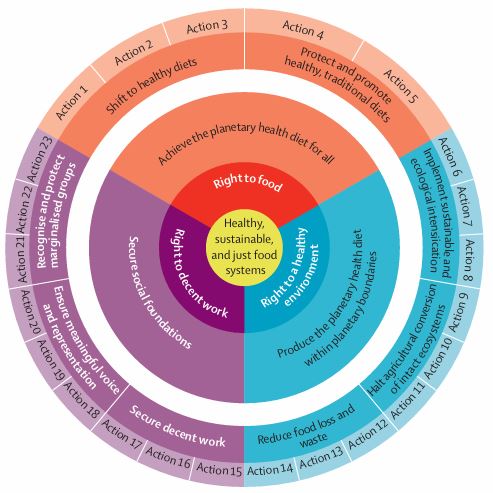
    The report lists three Goals to be met by the PHD (Section 5)

    1. Right to Healthy Food
    2. Within Planetary Boundaries
    3. With Secure and Just Social Foundations

    These are excellent goals, essential for a healthy, fair and sustainable planet and reflect the case that identifying a healthy diet is a multi-dimensional problem.

    The report proposes Solutions and Actions to achieve each Goal (Figure 16: Goals, solutions, and actions to achieve healthy, sustainable, and just food systems)

    However, it seems to me that there is another dimension and another Goal to be considered : Sentience

    Sentience is the capacity to feel and perceive subjective experiences. It includes feelings such as joy, pain, love, fear, compassion and much more

    I suggest a further Goal to guide the Planetary Health Diet:

    • Goal 4: The Right of all Sentient Beings to Life and Freedom

    This 4th Goal would provide an additional dimension to the principles underlying the PHD. It would address the horrendous experiences of animals processed by the industrial food system, logically point to a vegan diet, and crucially increase the likelihood of achieving the first three goals.

    If Goal 4 were added then further solutions and Actions will follow. As with the PHD, there is no enforcement of a plant-based diet, but there can be incentives. All of the Solutions that the PHD contains could be taken further, for instance those under Goal 2 to work within Planetary Boundaries, and to stay well within them.

    The following Solutions in addition to those proposed by the PHD would help to promote, implement and defend Goal 4:

    • Solution 9: Shift to plant-based diets
    • Solution 10: Promote replacements of animal-derived nutrition
    • Solution 11: Retire existing livestock and repurpose associated infrastructure where possible
    • Solution 12: Further extend sustainable biodiverse environments

    The fourth Goal would remove meat, dairy, fish and other feeling species from the PHD. There is no dispute that ruminants and many other animals, that have historically constituted part of our diets, are sentient beings feeling pain and emotions. That alone should be enough to warrant an end to their unnecessary suffering.

    But the report also describes other issues which give further reasons for seeking to remove these from our diets.

    Health

    Pandemics come with such massive costs to individuals and society that contemplating even a small probability of one is an extremely risky strategy. Given the increasing incidence of antimicrobial resistance, reducing antimicrobial use by 42% as described in the report is insufficient to lower the risks of livestock farming to an acceptable level.

    The extracts below are taken from Panel 2, which in my opinion if taken to a logical conclusion, imply that livestock farming is incompatible with a healthy, sustainable planet.

    “Antimicrobial resistance and pandemic risk have increased in part due to increased animal–human contact, either through direct interaction with wildlife or indirectly through vectors or intermediate, domesticated species”

    “Large biomass of domesticated animals and birds poses a risk for the emergence of novel pathogens affecting humans and animals, and accelerates the frequency of epidemic and pandemic disease events”

    “We estimated that adoption of the PHD would decrease antimicrobial use by approximately 42% due to reductions in animal-sourced foods”

    Animal Welfare

    The report suggests that “a smaller livestock sector creates opportunities to improve animal health and wellbeing, environmental outcomes, and labour quality” (Panel 7)

    It acknowledges “growing concern related to intensive, confined, and industrialised farming systems (ie, factory farming). High stocking densities, long transportation times, and practices that restrict natural behaviour”

    But 1000 factory farms instead of 2000 factory farms for example will still result in unacceptable animal suffering, and a stressful environment for those who work in them

    More resources should be allocated to educate, lobby, legislate and promote plant-based foods in order to bring a significant reduction and hopefully an end to this part of the food system

    Allocating more resources to the PHD will be challenging, and even more so for a plant-based food system. In a section entitled “Identify and address barriers to change ” the report identifies several difficulties in achieving the PHD, including:

    • Insufficient political leadership and appropriate governance framework
    • Corporate interests used against public interests
    • Weak and fragmented demand for action

    Ruminant Numbers

    One of the main contributors to agricultural Green House Gas emissions are ruminants (eg, cattle, sheep, and goats). The PHD anticipates a reduction in numbers, but estimates that consumption of livestock numbers per year would continue as follows:

    “livestock numbers would decline globally to 1·1 billion ruminant animals per year (a 26% reduction); dairy animals to 785 million per year (a 4% reduction); and non-ruminants (of which >95% are poultry and <5% are pigs) to 66 billion per year (a 19% reduction). Conversely, fish production would increase to 220 million tonnes per year (a 46% increase from 2020 levels)” (Panel 7)

    The models indicate that this would enable the goals to be achieved, but clearly huge numbers of animals will continue to be exploited and killed, so we would still expect there to be significant damage to health and biodiversity.

    Surprisingly, given the current state of the oceans, under the PHD fish production would increase!

    Is this a missed opportunity even for a non-vegan world? Perhaps it keeps the world within its planetary boundaries, but by a smaller margin.

    Reforestation

    One of the benefits described by the PHD is the opportunity for reforestation and the restoration of biodiversity:

    This restoration is particularly important in forest biomes, which are strongly transgressed and require 5·5m km² of tropical forest restoration and 3m km² of temperate forest restoration, at the expense of agricultural land (Land System Change)

    Under an EAT-Lancet scenario, the food system stays within land, biodiversity, and emission boundaries. Increased productivity, dietary shifts, and reduced food loss and waste reduce the land area needed for agricultural production, which drives the expansion of natural land available for biodiversity (Panel 6)

    Changes in livestock numbers indicate reductions in methane and nitrous oxide emissions (22% reduction versus 2020 emissions) and grazing lands (11% reduction versus 2020; ~340 Million hectares). (Panel 7: Challenges and changes in livestock production)

    In a vegan world, without the 1 billion ruminants, there could possibly be up to a further two billion hectares released for rewilding, an astonishing six times as much as the PHD estimates.

    Our World In Data describes the vast land use by livestock farming

    “Most of the world’s farmland today is used for the production of meat and dairy, either as grazing land or cropland to grow animal feed. 77% of all agricultural land is used to raise livestock for meat and dairy” [2]

    If the world adopted a plant-based diet, we would reduce global agricultural land use from 4 to 1 billion hectares [3]

    UK Considerations

    The report claims that “Both regional policies and voluntary initiatives in the EU and the UK have introduced zero-deforestation commitments across supply chains” (Solution 4: halt agricultural conversion of intact ecosystems)

    However, these ought not to be regarded as equivalent: The UK policy applies only to companies with turnover > £50m. The EU legislation is more rigorous requiring geolocation data, and is due to take effect in 2026, whereas currently no start data is available for UK

    So it is optimistic to assume that the UK zero-deforestation commitment will be effective, or even enforced

    Conclusion

    Implementing The Planetary Health Diet would certainly bring improvements to health, justice, biodiversity and a habitable planet.

    A completely plant-based diet would significantly amplify the gains estimated by the PHD, and further respect the rights of other species with whom we share this fragile Earth.

    [1] https://www.thelancet.com/journals/lancet/article/PIIS0140-6736(25)01201-2/fulltext

    [2] https://ourworldindata.org/agricultural-productivity-crucial

    [3] https://ourworldindata.org/land-use-diets

    Planetary Health Diet Report Sections and Goals

    Executive summary
    Section 1: what is a healthy diet?
    Section 2: sustainable food systems within planetary boundaries
    Section 3: justice in food systems
    Section 4: assessing potential environmental and socioeconomic consequences of a food systems transformation
    Section 5: solutions and actions to improve health, environmental sustainability, and justice
    Goal 1: achieve the Planetary Health Diet for all
    Goal 2: produce the planetary health diet within planetary boundaries
    Goal 3: secure social foundations
    Section 6: A just food systems transformation is possible
    Conclusions: accelerating meaningful action

  • Meat Consumption and The Extinction of Wildlife

    Meat Consumption and The Extinction of Wildlife

    The demand for meat as a source of food is a primary cause of biodiversity loss and the extinction of wildlife. This Piece looks at the evidence.

    “Biodiversity Loss” is the decline in the variety of life on Earth, from genes and species to entire ecosystems

    It is an increasing problem globally. The Living Planet Index (LPI) which measures the average decline in 34,000 monitored wildlife species across the world reports a 73% average decline in populations since 1970 [1]

    In the UK State of Nature report of biodiversity decline since 1970, 10,008 species were assessed, 2% (151 species) are extinct in Great Britain, and 16% (almost 1,500 species) are now threatened with extinction here. Since 2010, 41% of species showed strong or moderate decreases [2]

    We are losing destroying the awesome beauty and wonder of the natural world.

    And we will need to explain to the next generation why they will be looking out on bleak sterile landscapes where we currently enjoy vibrant forests teeming with life

    Science forecasts that it will be as bad as that.

    But in addition to this, when biodiversity collapses then human civilisation as we know it, which depends on it, will also collapse [3]

    The question urgently needs to be asked, Why is biodiversity falling so precipitously? If we can identify the cause we may be able to do something about it.

    A paper published recently in the scientific journal, Nature Food, based on an analysis of about 30,000 terrestrial vertebrates provides some answers, and it is clear about the primary cause of biodiversity loss [4]

    “Agriculturally driven habitat degradation and destruction is the biggest threat to global biodiversity”

    The paper describes a high resolution method of analysing land use on extinctions and looks at a range of agricultural practices across the planet. In this piece I will focus on what it has to say about the impact of livestock farming

    For example,

    “Animal products generally have substantially greater impacts on species extinction risk than staple vegetal products. This is a result of the inherently inefficient nature of these products”

    This confirms earlier research [5]

    The impacts caused by the consumption of animal products are not all equal and can vary depending on where the animals are raised:

    “In particular, animal products and commodities grown in the tropics are generally much more impactful than staple crops and vegetables”

    “Producing a unit of animal product requires grazing land and/or cropland for feed production, which when combined with the intrinsic feed conversion efficiency of animals leads to high land use and hence extinction impacts”

    The numbers are revealing. “Ruminant meat, for example, has a weighted global median opportunity cost on speciesʼ extinctions ~340 times greater than that of grains, by mass, and around 100 times greater than plant derived proteins such as soybeans and other legumes”

    So beef from Brazil is clearly a problem and it is striking to realise that it can increase extinction rates by a factor of 340 in most cases and more in the worst

    The paper uses data from 174 countries and discussed six countries in detail, including the UK

    “Our results reveal the very substantial contribution of ruminant meat consumption to the per capita extinction impact of food consumption in every one of these countries”

    Species extinction is not the only problem.

    “Even though the United Kingdom and similar countries might have low per capita impacts, land use for agriculture is nevertheless the biggest threat to biodiversity in these places. Sixty-three percent of agricultural land in the United Kingdom is used as grazing land for ruminants”

    The following three solutions and their downsides are discussed

    1) Particularly in wealthier countries there should be “serious consideration of steps to dramatically reduce consumption of animal products, especially ruminant meat”

    2 Intensification of farming and hence land-use reduction—”but often this comes at the cost of higher localized emissions or resource uses that might affect biodiversity or a potential reduction in animal welfare”

    3) Offshoring of production of the food to more biodiverse parts of the world. Whereas these may increase biodiversity domestically, it seems very likely that at global scale, they will cause net biodiversity harm

    The first option, reducing meat consumption, appears to be the best option. The second, also known as factory farming is an animal nightmare, and the third moves the damage to potentially more vulnerable areas.

    However, given the serious risk to the planet if biodiversity loss and extinctions are not adequately addressed, it seems to me that we must go further and a more radical step is required; we must Stop Eating Meat completely.

    Although this is the logical step, it is not widely practised. There are a host of reasons including financial, political, educational, cultural and personal considerations.

    Nevertheless, the case needs to be argued strongly at every level for a transformation in our diets if life is to survive on the planet

    The Guardian is a very useful source of climate related information. But a recent article demonstrates how difficult it is for the message for plant-based diets to break through.

    The article, entitled, “How the world’s taste for soya is eating Brazil’s Amazon” discussed the huge damage that soya bean farming is doing to wildlife and biodiversity in Brazil. But the article failed to mention why soya is being grown. The analysis stopped at the ports from which the soya was exported! [6]

    Possibly after inevitable feedback the following paragraph was added

    “Nearly 80% of soya beans are used for livestock and aquaculture, as China, the main buyer, uses 85% for animal feed, linking rising global meat demand to Brazil’s expanding exports.”

    How can readers reach informed decisions when such pertinent facts are omitted from an article like this in the first place?

    The UK is also contributing to this meat-led deforestation as it imports more than 3 million metric tons of soybeans annually. Around 90% of it feeds the animal agriculture industry — with poultry as the main consumer.

    The UK Soy Manifesto aims to remedy this. But the quantity of verified deforestation and conversion free soy at point of UK import remains small, and only 60% of imported soya is covered by the Manifesto [7]

    At this point critics will suggest that vegans are also contributing to the problem through a growing appetite for plant-based products such as soy milk, tofu, and meat substitutes

    But this is not the case. Animal conversion of soya into protein is so inefficient that if plant-based products were to replace meat then soya consumption would be dramatically reduced. Directly consuming soya actually means growing less soya, leaving more land available for wildlife

    Conclusion

    To prevent biodiversity loss, species extinction, and the risk of societal collapse the world must move to plant-based diets as quickly as possible. This will be easier in wealthy countries who should take the lead such as the UK where nutritious alternatives are already available and more are being developed.

    References

    [1a] https://ourworldindata.org/2024-living-planet-index

    The 2024 Living Planet Index reports a 73% average decline in wildlife populations — what’s changed since the last report?
    10/10/2024

    [1b] https://www.livingplanetindex.org/

    [1c] https://livingplanet.panda.org/en-GB/

    [2] https://stateofnature.org.uk/wp-content/uploads/2023/09/TP25999-State-of-Nature-main-report_2023_FULL-DOC-v12.pdf

    [3] https://www.stockholmresilience.org/research/research-stories/2025-06-03-new-quantifications-planetary-boundaries-in-the-future.html

    New quantifications: Planetary Boundaries in the future, 3rd June 2025

    [4] https://www.nature.com/articles/s43016-025-01224-w

    Food impacts on species extinction risks can vary by three orders of magnitude, 9th September 2025

    [5] https://www.science.org/doi/10.1126/science.aaq0216

    Reducing food’s environmental impacts through producers and consumers, 1st June 2018

    [6] https://www.theguardian.com/global-development/2025/sep/29/agriculture-deforestation-farming-soya-cultivation-eating-brazil-amazon

    How the world’s taste for soya is eating Brazil’s Amazon, 29/09/2025

    [7] https://www.uksoymanifesto.uk/site/assets/files/1532/uk_soy_manifesto_progress_towards_2025_16july25_vf.pdf

    Progress towards the Goal of the UK Soy
    Manifesto – July 2025

  • Ocean – Film Review

    Ocean – Film Review

    “Ocean”, with commentary by Sir David Attenborough, “takes viewers on a breathtaking journey showing there is nowhere more vital for our survival, more full of life, wonder, or surprise, than the ocean” [1]

    The film, released on May 8th, this year, informed by recent science, reveals the richness of life that lives both below and above the ocean waves.

    But this is no dispassionate account; it evokes a range of emotions – awe, horror, anger, despair and hope will assail the viewer, as the film navigates through the beauty of ocean life, the attacks and threats against its beautiful life, and possible solutions to these problems.

    The film does not advocate a vegan diet, and Attenborough does not directly propose eating less fish or meat, although that could well be a conclusion drawn from the film

    Although, in my opinion, unless the film inspires a greater transition to plant based diets, or at least a significant reduction in the consumption of fish and meat, the Hope expressed in the film may turn to Disappointment.

    Awesome Life

    The film begins with a view of some of the ocean life, of its depths, its 40,000 submarine mountains, of ocean currents, and shark migrations, of shallow coastal seas with their giant kelp forests and coral reefs, of the amazing phytoplankton at the base of the ocean food chain

    “So the open ocean is not a featureless desert, after all. It is more connected than we had ever imagined”

    The Horror of Scallop Dredging

    And then suddenly the story changes from awe to horror

    To the background of the jarring, reverberating sound of a scallop trawler Attenborough describes the scene,

    “A modern Industrial bottom trawler scours the ocean floor with a chain or metal beam forcing anything it disturbs into the net behind. It smashes its way across the sea bed, destroying nearly everything in its path, often on the hunt for just a single species … almost everything else is discarded”

    Local fishermen watch powerless as trawlers destroy their livelihood

    The consequences are devastating for sea life and for the planet as huge quantities of Carbon Dioxide are released, contributing to climate breakdown

    Astonishingly, this is legal, encouraged by law, allowed in “Marine Protected Areas” and supported by billions of dollars of government subsidies our money.

    This is the true price of a scallop

    The Nightmare Continues – Industrial Trawling

    Attenborough then moves on to look at Industrial Trawlers.

    “Lines of baited hooks. 50 miles long wheel in millions of sharks every year. We have now killed two thirds of all large predatory fish. Walls of nets, hundreds of metres high leave few survivors. Sharks and turtles survived the extinction of the dinosaurs, but may not outlive this”

    Coastal communities lose the food source they have relied on for Millennia. This is modern colonialism at sea

    The balance and viability of life is destroyed as the hunted sharks are no longer there to play their essential role in maintaining the lives of all inhabitants of coral reefs.

    Antarctic Krill

    “Almost every animal in the Antarctic relies on just a single species, a small red crustacean, Antarctic Krill”

    However, the factory ships are everywhere including Antarctica. And they are fishing for krill.

    The ships suck hundreds of thousands of tons of krill into vast nets. It is largely processed into livestock and pet food (50-60%) and health supplements (25-30%)

    As a result, antarctic wildlife is threatened with starvation, and entangled in nets, sometimes fatally, just to feed farm animals [2]

    The Oceans Can Recover

    But Attenborough is hopeful,

    “I would find it hard not to lose hope were it not for the most remarkable discovery of all. The ocean can recover faster than we had ever thought possible. It can bounce back to life. For, if left alone, it may not just recover but thrive beyond anything anyone alive has ever seen”

    Attenborough then goes on to describe several projects where this is to be seen, in a No-Take zone off the west coast of France and Papahānaumokuākea Marine National Monument in the Hawaiian islands where 14 million migrating seabirds now return each year [3]

    In addition, the new life is seen to ‘Spillover’ into surrounding areas

    Comments

    The film is well worth watching to gain an appreciation of the awesome life within the oceans and the threats to their existence.

    The planet is facing many interrelated crises; the threat to ocean life is just one as “humanity accelerates into a deadly Polycrisis” [4]

    Marine reserves and No-Take zones are necessary for ocean recovery, but will not be enough if other problems such as Global Warming, Ocean Acidification, Plastic Pollution and Agricultural Chemical runoff are not solved, and most of these problems will not be fixed without significant reductions in livestock farming and meat production

    Good News. A month after the film was released, the UK government announced a plan to ban bottom trawling in 41 of the 178 MPAs [5]

    The United Nations Ocean Conference is meeting in France from 9th to 13th June this week [6]. It will be interesting to see what actions it takes to address the issues highlighted by the film.

    Since this Piece was posted, George Monbiot has commented, “Attenborough’s Ocean is the film I’ve been waiting my whole career for – now the world must act on its message … The documentary shows the damage that fishing does to our planet. So why does the industry still hold governments to ransom?” [7]

    References

    [1] https://www.oceanfilm.net/

    [2] https://seashepherd.org/2025/04/18/antarctic-krill-supertrawler-kills-humpback-whale

    [3] https://phys.org/news/2022-10-world-largest-no-fishing-zone-benefits.html

    [4] A Climate of Truth, page 1, https://www.hive.co.uk/Product/Mike-Berners-Lee/A-Climate-of-Truth–Why-We-Need-It-and-How-To-Get-It/31198679

    [5] https://www.theguardian.com/environment/2025/jun/08/campaigners-hail-plan-to-ban-bottom-trawling-in-half-of-englands-protected-seas
    8/6/25

    [6] https://sdgs.un.org/conferences/ocean2025

    [7] https://www.theguardian.com/commentisfree/2025/jun/13/ocean-film-world-david-atenborough-documentary-fishing-industry

  • A Climate of Truth – Book Review

    A Climate of Truth – Book Review

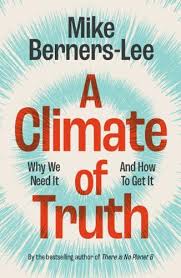
    A Climate of Truth by Mike Berners-Lee was published earlier this year. The book is about interrelated crises that are threatening humanity, and the essential role of truthfulness when attempting to analyze, explain and resolve them [1]

    This post focuses on a few sections of the book that are directly relevant to plant based or vegan diets. Other sections are, of course, equally informative and well worth reading

    “There is almost certainly – but not inevitably – a huge storm ahead. The values we promote now and the actions we take can change the ferocity of that storm, as well as the impact that it has on human lives”, p212

    The book begins with the observation that humanity is accelerating into a deadly Polycrisis – a set of overlapping, and reinforcing crises threatening civilisation including climate, biodiversity, health, and pollution crises.

    The book considers a range of causes. Amongst them, and a significant contributor to most of these problems is the livestock and meat production industry. Firstly, the industry contributes to the crisis through its environmentally destructive activities, and secondly through the disinformation it promotes to hide the damage and stifle the response. Berners-Lee exposes both.

    While Berners-Lee is clear that meat consumption must be radically reduced as part of the solution to the crisis, he is not advocating wholly plant based diets. However, the book is a great source of information and should convince all interested readers that changes must be made to diet in order to address these crises. For myself, it is evidence similar to that which is presented in the book that persuaded me to take up a plant based diet and the book has inspired me to look at other areas of my life that can be changed.

    Here are some extracts from the book, particularly highlighting the role of meat production.

    Food and Biodiversity, pg 60

    The drive to feed an ever-greater number of people ever-more cheaply and with ever-more animal products has been hugely detrimental for biodiversity and land fertility, as well as for climate.

    The inefficiency of feeding plants to animals, compared with simply growing plants and eating them is dramatically increasing the pressure.

    We need to talk about Chicken, pg 62

    The production of every meat has its own issues, but chicken makes a case study that is indicative of the meat industry.

    The vast majority of chicken is grown through a system in which the birds have been bred to put on weight at the fastest possible rate – but that leaves them almost unable to stand.

    They are packed in tightly, because that is cheaper, and leads to fewer energy losses through chickens doing energy wasting things – like walking around and having to keep warm.

    However, to prevent disease in this over-packed environment, and also to stimulate growth, they are fed antibiotics – raising the spectre of antibiotic resistance in humans.

    Antibiotics don’t protect against viral infection. We know that bird flu jumping across to humans at scale would make COVID-19 look like a minor inconvenience.

    we also know these chicken factories cultivate exactly the conditions which exacerbate that risk.

    The streamlining of chicken production to minimise the cost per kilo of meat leads to a product that is nutritionally inferior to the product we were eating in the 1970s.

    The modern version typically has far more fat but only one-fifth of the omega 3.

    And these chickens are fed entirely on grain, which requires vastly more land than would be required to provide the same nutrition to humans via a plant-based diet.

    Meanwhile, in the UK, for example, phosphorus pollution from the poo of the 20 million chickens in the Wye Valley is thought to have almost wiped out the fish population in the River Wye [2].

    It is possible to manage this excrement, but that costs money that currently not enough companies are prepared to pay. There are no wins here, and a lot of losses

    Pandemics and Antimicrobial Resistance, pg 88

    Resistance to every kind of antimicrobial antibiotics can be slowed by the reduction of quantities used on farms and by humans. The threat of diseases crossing from farm animals to humans will be greatly reduced by doing away with over-intensive animal farm systems and by reduction in farm animal numbers.

    Truth in the Food and Farming Industries, pg 204

    … some of the big changes we need in our food system are crystal clear. To achieve them, we are going to need more farmers than we have now, and they are going to need more support, both financially and in the development of new areas of expertise.

    The food processing and retail industries need to do a much better job of letting customers know what lies behind the food they supply, without greenwashing or rose-tinting it. If the reality of the chicken on sale is an antibiotic-packed, bird-flu-inducing hideous experience for the chickens, then don’t pretend otherwise. The real solution, of course is to sell something about which you can tell an authentic, positive story. Most of the global meat, dairy and fish industries rely on customers not understanding, or not thinking about, the supply chains when they go to the shops: the desperate living conditions, the antibiotics, the sea lice, the pandemic threats; to say nothing of the climate impacts and the pressures put on both nature and the global food supply.

    Vegan Pieces – Further Notes

    As Berners-Lee indicates, a major source of disinformation that weakens our ability to understand and respond to these crises comes from the meat and livestock industry.

    The Freedom Food Alliance has recently shed some light on this. The Alliance is not a vegan organisation but does help to explain how the meat industry obscures the truth about it’s products.

    In February this year the Freedom Food Alliance published a detailed report titled, Harvesting Denial, Distractions and Deception: Revealing Animal Agriculture’s Disinformation Strategies and Exploring Solutions [3]. The report analyses how the animal agriculture industry uses disinformation to block progress towards plant-based foods, despite environmental and health benefits.

    The study’s lead author Nicholas Carter said “Animal agriculture giants are waging a disinformation war, threatening public health and the planet” [4]

    In an earlier report, Lifting the Veil: A Deep Dive into The Disinformation Practices of Animal Agriculture, the authors wrote,

    “In an era where truth seems more malleable than ever, The Freedom Food Alliance’s 2024 Disinformation Report emerges as a critical lens through which we can discern the murky waters of misinformation and disinformation in the animal agriculture sector. This comprehensive analysis sheds light on the sophisticated strategies employed by the industry to mislead the public, policymakers, and even investors about the environmental and health impacts of animal-based food production” [5]

    [1] https://www.hive.co.uk/Product/Mike-Berners-Lee/A-Climate-of-Truth–Why-We-Need-It-and-How-To-Get-It/31198679

    [2] https://wyeuskfoundation.org/news/nations-favourite-river-facing-ecological-disaster, June 2020

    [3] https://www.freedomfoodalliance.org/thereport, Feb 2025

    [4] https://plantbasednews.org/news/environment/report-meat-industry-disinformation, Feb 2025

    [5] https://www.freedomfoodalliance.org/unfork-the-food-system/the-disinfo-report, May 2024

  • April 2025 – Recent News

    April 2025 – Recent News

    Every month the news presents further reasons to take up plant based diets. Here are some articles that have recently caught my attention.

    Matilda and the Brave Escape, April 22nd
    A Vegan film is the Webby’s People’s Voice Winner 2025 in the animation category
    https://winners.webbyawards.com/winners/video-film/general-video-film/animation

    Based on the true story of Matilda the pig, the film was released in November 2024, https://www.matildaandthebraveescape.com
    “Matilda and the Brave Escape is an uplifting and empowering short film based on the true story of Matilda, a pig who escaped from a farm in the UK and gave birth to her piglets in a nearby woodland – saving herself and her piglets from certain death”
    Ed Winters, https://www.surgeactivism.org


    Antarctic Krill Supertrawler Kills Humpback Whale : the trail leads to Scottish Salmon, April 18th
    https://seashepherd.org/2025/04/18/antarctic-krill-supertrawler-kills-humpback-whale

    The whale, which feeds on krill, was caught in the net of the Chilean Antarctic Endeavour which was fishing for krill in the same place.

    Why are krill being fished?

    “But krill are increasingly being fished by multinational companies to supply food for farmed fish in Scotland and around the world. A rich source of protein, they are also marketed as pet food and as human health supplements”
    https://theferret.scot/antarctic-krill-fishing-boosted-fish-farming

    This is not the only way that the animal feed industry is harming wildlife …

    Sand eels

    Good news. Britain banned Sand eel fishing last year in an effort to protect and sustain the numbers of puffins, auks and kittiwakes that eat them.

    https://www.independent.co.uk/news/business/eu-sand-eel-fishing-ban-brexit-b2683464.html January 21st

    Bad News. Danish fishing vessels want to continue to fish them for animal feed
    https://eurofish.dk/sand-eels-the-little-fish-with-huge-economic-importance


    Good News. Plan for Norfolk megafarm rejected over environmental concerns, April 3rd
    https://www.theguardian.com/environment/2025/apr/03/plan-for-norfolk-megafarm-rejected-by-councillors-over-environmental-concerns

    The application, submitted by Cranswick, would have created one of the largest industrial poultry and pig units in Europe


    Book : A Climate of Truth by Mike Berners Lee, published March 19th

    https://www.hive.co.uk/Product/Mike-Berners-Lee/A-Climate-of-Truth–Why-We-Need-It-and-How-To-Get-It/31198679

    “We have most of the technology we need to combat the climate crisis – and most people want to see more action. But after three decades of climate COPs, we are accelerating into a polycrisis of climate, food security, biodiversity, pollution, inequality, and more. What, exactly, has been holding us back? Mike Berners-Lee looks at the challenge from new angles”


    Good News. How the Meaty Danes embraced a World-first Plant-Based Diet, February 2nd

    https://www.theguardian.com/environment/2025/jan/31/more-carrot-less-stick-how-meat-loving-danes-were-sold-a-plant-led-world-first
    Focus on what we want more of, not what we want less of. More carrot, less stick

    “presented plant-based food as a business opportunity”

    However, the Plant-Based action plan did not set targets for cutting meat consumption or livestock numbers. So only time will tell how successful it is. And when it comes to the climate crisis we are running out of time. And will sand eels still be stolen from endangered puffins to feed their livestock?

    And yet another way that fish farming harms wildlife …

    Humpback whale entangled in rope at Skye fish farm, January 30th
    https://www.bbc.co.uk/news/articles/cy8p407d4vgo

    Fortunately in this case the whale was freed

    But other humpbacks have been found dead in East Lothian and Caithness following entanglements


    The Government’s “Let’s Eat Balanced” Campaign is Unbalanced and Unhealthy, January 28th

    The government campaign promotes consumption of red meat which is associated with coronary heart disease, some forms of cancer and type 2 diabetes. Another case of balancing Truth with Error. What would Mike Berners-Lee have to say about this?

    https://feedbackglobal.org/wp-content/uploads/2025/01/AHDB-Jan-2025.pdf

    A group of environmental organisations have written a critical letter to the government about The Let’s Eat Balanced campaign : “The Let’s Eat Balanced campaign flies in the face of the government’s own public health and sustainability goals”

    https://philiplymbery.com/why-are-we-still-being-told-to-eat-more-meat

    For reference, here is the government board website
    https://ahdb.org.uk/WeEatBalanced
    Interestingly, the ‘H’ in the name, AHDB, is disingenuous. It stands for ‘Horticulture’. But the horticulture and potato sectors withdrew from the AHDB in 2021

  • A Philosophical Look at Meat Production

    A Philosophical Look at Meat Production

    “Animals are my friends. And I dont eat my friends”
    (George Bernard Shaw)

    1 Introduction

    A range of considerations have always contributed to humanity’s relationship with non-human animals. But advances in science and technology have raised new questions of a philosophical nature and that challenge traditional views

    A version of this Piece, was originally presented to a local philosophy group as a starting point for a discussion of some of those questions. [1.1]

    2 Environmental Issues

    The devastating impact of meat production on the planet is not merely an environmental issue but a moral problem. Livestock farming produces up to 15% of human-produced Greenhouse gases such as Carbon Dioxide and Methane because of changes to land use and emissions [2.1] . The resulting increase in average global temperatures leads to rising sea levels and higher incidences of flooding, droughts and wild fires which are already driving vulnerable populations from their homes.

    In 2022 The United Nations Intergovernmental Panel on Climate Change (IPPC) published a report on Climate change, Impacts, Adaptation & Vulnerability [2.2]. “Approximately 3.3 to 3.6 billion people are living in contexts that are highly vulnerable to climate change, so it is essential that all available steps are taken to address climate change”.

    There are many factors contributing to climate change and no silver bullet is going to fix the problem, but the report is clear that the steps to be taken must include changes to diet.

    George Monbiot suggests that this is more than a problem of millions of refugees but a challenge to civilization itself, “Whether human beings survive this century and the next, whether other lifeforms can live alongside us: above all, this depends on the way we eat. We can cut our consumption of everything else close to zero and still drive living systems to collapse, unless we change our diets”. [2.3]

    The implication is that by consuming meat in the way that we do, we are literally stealing the resources required to support a living planet in the future in order to satisfy our desires today. A theft from the next generation of unprecedented magnitude and consequence. If we continue with Business As Usual, then the environment that has supported humans and civilization for thousands of years will collapse. Food production is part of the problem.

    I have been following plant based diets for six years. I was initially motivated to take this step by the environmental arguments mentioned above. I soon understood that there were other issues to consider regarding meat eating [2.4].

    Clearly, not everyone is able to take this step or convinced that it is necessary, so there needs to be a continuous process of listening and seeking to understand one another when discussing these things.

    3 A Very Brief History

    Humanity’s attitude to animals has been mixed. For example, the 17th Century philosopher, Descartes, claimed that animals were mere machines, automata, and was reported to have said that they experience neither pleasure nor pain, nor anything else. On the back of this thinking, experimenters would dissect living animals before enthusiastic audiences. [3.1]

    He wrote that the mechanical understanding of animals absolved people of any guilt for killing and eating animals”. [3.2]

    Not all agreed with him but the scientist Robert Boyle (1627-1691) would complain of those who objected as “a discouraging impediment to the empire of man over the inferior creatures”.

    Although the purpose of these activities was not to eat the animals it indicates a way of thinking about them which can affect the way they are viewed in other contexts. Not until the 1870s was official action taken to limit these laboratory practices.

    Alongside this thinking there have always been those who recognised that animals were more than mere machines or that they were not just here to be eaten. Apparently the Greek philosopher and mathematician Pythagoras (570-495 BC) was a vegetarian, as recorded by Eudoxus who wrote that “Pythagoras was distinguished by such purity and so avoided killing and killers that he not only abstained from animal foods, but even kept his distance from cooks and hunters”. [3.3]

    The Utilitarian philosopher Jeremy Bentham (1748-1832), recognised that animals have feelings when he wrote, “The question is not, Can they reason? or Can they talk? but Can they suffer?” [3.4]

    However, despite this concern, it is interesting to see that Bentham is no friend of veganism. The principle of Utilitarianism is that “the greatest happiness of the greatest number should be the guiding principle of conduct”. As a result Bentham is happy with eating animals as long as they are killed without suffering. A few lines earlier he had written, “There is very good reason why we should be allowed to eat such non-human animals as we like to eat: we are the better for it, and they are never the worse”. An objection might be that we are often not the better for it, the animal is not free, it has not chosen to be killed, and Bentham has not considered the impact on the environment, or that by multiplying the number of animals for food, meat-eating Utilitarians would increase the amount of suffering in the world.

    4 The situation today – Similarities are Important

    Science has also moved on. It is now understood that animals are sentient, that is they are able to perceive, to feel pain and pleasure, to experience emotions such as joy and fear, to form attachments and have distinct personalities. They can reason, plan and communicate in ways that we are only beginning to appreciate. [4.1]

    This growing body of evidence is one of the reasons for recent government legislation. In May 2023, the UK Animal Sentience Act came into force recognising that animals can feel emotions, joy, pain and fear. [4.2]

    It covered the expected vertebrates, but also included creatures such as cephalopods (octopuses, squid and cuttlefish) and decapods (crabs, lobsters and crayfish).

    The inclusion of an octopus may seem surprising, but octopuses have nine brains, including one central brain and eight mini brains in their arms, along with their blue blood and three hearts. Octopuses have as many neurons as a dog, can solve puzzles, use tools and recognise people.

    What this means is that we must consider the sentience of animals while they are being confined or grazed and reared for food and clothing and other uses.

    5 Industrial Farming

    Even with the usual view of livestock farming there are questions that can be asked about a right to freedom and a natural life.

    However, the situation becomes more problematic when looking closely at some of the usual practices that take place in the production of meat and dairy.

    Dairy cows are sentient, social animals with feelings and emotions, bonding to their young, but calves are usually separated from their mothers within forty eight hours [5.1]. Is there a problem here?

    Pigs are intelligent and social animals. In the wild, the young begin life in small groups of about eight and live for up to 20 years. In the UK approximately ten million pigs are slaughtered at six months every year. Most are reared on intensive factory farms in large groups where normal hierarchies cannot be established leading to inevitable stress and requiring certain methods of control described in the Government document, Code of Practice for the welfare of Pigs. [5.2]

    Other welfare issues are found with factory farmed poultry. [5.3]

    The question then has to be asked, Does the enjoyment of meat justify this treatment to intelligent and sentient animals?

    “Animal factories are one more sign of the extent to which our technological capacities have advanced faster than our ethics”, Peter Singer. [5.4]

    It may be argued that none of this applies to grass fed free range livestock. And certainly they may experience better lives. But the lived experience of the animal is not the only thing to consider; the Animal Sentience Act has not rendered abattoirs obsolete.

    As Paul McCartney said, “If slaughterhouses had glass walls we would all be vegetarian” – but we allow others to work in them on our behalf. They may be well trained and take a professional pride in their job [5.5], but the issue is that the animals have no choice. Furthermore it is often the case that this work damages the mental health of the workers. [5.6]

    “Veganism is not about giving anything up or losing anything; it is about gaining peace within yourself that comes from embracing nonviolence and refusing to participate in the exploitation of the vulnerable”. [5.7]

    “I hold that the more helpless a creature, the more entitled it is to protection by man from the cruelty of man”. (Mahatma Gandhi)

    6 Logical Arguments

    Another approach to justifying meat eating is to expose inconsistencies in non-meat eaters. This argument would work if the inconsistency directly validates meat eating, which is not the case. For instance, sometimes it is claimed that vegans are inconsistent because they would eat animals in extreme circumstances. This was an argument presented in a discussion of the subject in the BBC Moral Maze [6.1]. While this may be the case for someone trapped on a desert island with their pet dog, it is not relevant to the question of the ethics of meat eating. “But what does it prove? Simply that when placed in an extreme situation we are more likely to do something morally objectionable in order to survive”. [6.2]

    As an aside, the appeal to logic on its own is not always helpful as this discussion is also about human responses to an emotional problem. Even in less extreme situations vegans should not feel guilty if they inadvertently, or for some other reason, eat an animal product. If one of the aims of a plant based diet is “gaining peace within yourself” then condemning yourself because an arbitrary line has been crossed is counterproductive and will often lead to giving up altogether. Likewise, vegans should not condemn meat eaters who have not been persuaded by the arguments, but rather continue the dialogue in a non-judgemental way.

    7 Differences are also important

    Peter Singer, professor of bioethics, defines Speciesism: “in its primary and most important form, as a prejudice or bias in favour of the interests of members of one’s own species and against those of members of other species, on the basis of species alone” [7.1].

    In his book, “Animal Rights Now”, he discusses how Speciesism can affect the way we treat animals in areas such as agriculture, medicine, experimentation and warfare. It is clear from many of the cases he describes that the routine application of procedures such as electric shocks or removal of teeth are enabled because those involved deny that members of other species have a right to be free from unnecessary pain or a right to any degree of a fulfilled independent life. Ultimately, Speciesism is the basis of the denial of the right to life enabling animals to be killed for food and other uses.

    Points for Discussion

    Should we take future generations into account when considering the impacts of food production?

    To what extent do you think that animals have the capacity to feel emotions, pain and to enjoy a fulfilled life?

    What rights are conferred to animals by the capacity for sentient experience?

    Is it right to think that animals should fall outside of domains of justice or fairness because they are a different species?

    Can we justify the different treatment of dogs and pigs?

    Does anyone have a right to tell me what I can and cannot eat?

    References

    1.1 This discussion paper was originally presented at the Wheathampstead U3A Philosophy Group, March 2025.

    The playwright and critic, George Bernard Shaw, 1856-1950, who disliked apostrophes, quoted at the start of this post, lived at the house, now known as “Shaw’s Corner”, 3 miles from Wheathampstead

    2.1. https://interactive.carbonbrief.org/what-is-the-climate-impact-of-eating-meat-and-dairy/index.html

    2.2 IPPC Assessment Report on Adaption and Vulnerability
    https://www.ipcc.ch/report/sixth-assessment-report-working-group-ii, March 2022

    2.3 Butchery of the Planet, George Monbiot, 2018
    https://www.monbiot.com/2018/06/13/butchery-of-the-planet

    2.4 An Easy Vegan Piece: Ethics
    https://www.veganpieces.org/animal-welfare/ethics

    3.1 Descartes and Vivisection
    By Kevin R. D. Shepherd, 15th February 2015
    https://kevinrdshepherdcommentaries.info/2015/02/descartes-and-vivisection_15.html

    3.2 Descartes, Letter to Plempius, Feb 15 1638
    https://plato.stanford.edu/entries/consciousness-animal

    3.3 https://www.veganpieces.org/history/pythagoras

    3.4 Jeremy Bentham, An Introduction to the Principles of Morals and Legislation, 1823 edition, Chapter XVII, Section 1, Paragraph 4, Footnote
    https://www.earlymoderntexts.com/assets/pdfs/bentham1780.pdf
    Copyright © Jonathan Bennett 2017
    (Note, the 1789 edition does not contain this quote)
    The First Edition of the work was privately printed in 1780 and first published in 1789 with added notes.
    ‘A New Edition, corrected by the Author’, was published in 1823, and contains the footnote with the quotation.

    4.1 Here’s what the science says about animal sentience, Nov 24, 2017
    https://theconversation.com/heres-what-the-science-says-about-animal-sentience-88047

    4.2 Animal Welfare (Sentience) Act 2022
    https://www.legislation.gov.uk/ukpga/2022/22/contents

    5.1 Cafre, College of Agriculture, Food and Rural Enterprise
    https://www.cafre.ac.uk/business-support/agriculture/dairy/dairying-technical-support/calf-welfare/

    5.2 Code of Practice for the Welfare of Pigs, October 2023
    https://www.gov.uk/government/publications/pigs-on-farm-welfare/caring-for-pigs, Paragraph 122-151

    5.3 Consider the Christmas Turkey
    https://www.veganpieces.org/animal-welfare/consider-the-christmas-turkey

    5.4 Animal Rights : A History by Peter Singer, Emeritus Professor of Bioethics at Princeton University
    https://thinkdifferentlyaboutsheep.weebly.com/animal-rights-a-history-peter-singer.html

    5.5 https://www.foodtraining.org.uk/level2abattoirworker

    5.6 The Psychological Impact of Slaughterhouse Employment: A Systematic Literature Review, July 2021
    https://journals.sagepub.com/doi/full/10.1177/15248380211030243

    5.7 A Simple Question
    Gary Francione, Visiting Professor of Philosophy at the University of Lincoln.
    https://gary-francione.medium.com/if-you-are-not-a-vegan-i-have-a-simple-question-for-you-why-not-db228e6736e1

    6.1 BBC The Moral Maze, https://www.bbc.co.uk/sounds/play/m001whc9

    6.2 How to Argue with a Meat Eater and win Every Time, 2023, Ed Winters, p207

    https://www.hive.co.uk/Product/Ed-Winters/How-to-Argue-With-a-Meat-Eater-And-Win-Every-Time/30166402

    7.1 Animal Liberation Now, Peter Singer, 2023 Edition, https://www.penguin.co.uk/books/456655/animal-liberation-now-by-singer-peter/9781529925548
  • Consider the Christmas Turkey

    Consider the Christmas Turkey

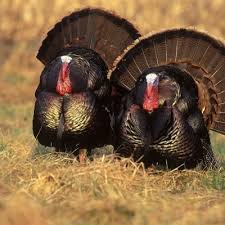
    This is the time of year when Christians particularly celebrate the birth of Jesus, Emmanuel, “God with us”. But many Christians, when speaking on the subject, instead begin by remarking on how much they enjoy the taste of turkey.

    And this is not just an occasional digression, but occurs so often that one could mistakenly think it to be an essential part of christian teaching

    This is unfortunate, because in so doing not only do the speakers risk losing the interest of those in their audience who are aware of the cruelty inflicted on turkeys bred for christmas dinners, but they also expose christian teaching to a charge of inconsistency; how can a celebration of The Prince of Peace be associated with so much unnecessary suffering?

    And this is not the only problem with the production of christmas turkeys. The farms industrial units are breeding grounds for bird flu and antibiotic resistant bacteria which pose a risk of global pandemics and are a serious threat to human health

    I wrote a Piece about this in 2021 [1]. Little has changed since then.

    Hang on, I hear you say, Isn’t it a bit extreme to use the word ‘cruel’ when talking about a christmas dinner? Well, let’s have a look in more detail about how the turkey gets to the dinner plate.

    The life of a turkey

    In the wild these intelligent and social birds live in groups of about twenty individuals for up to 10 years [2]. They establish a pecking order which gives structure to the group.

    They are sentient, which means they have the capacity to experience feelings and sensations, and to have some cognitive abilities

    They can also bond closely to people. In Consider the Turkey, they are described as smart and sociable companions. [3]

    However, most turkeys in the UK are reared in intensive factory units, some holding up to 25000 birds [4]. They are Packed in tightly; an unenforced government guideline suggests a 16cm square for each kilogram of bird in broiler-type housing [5, para 34]. Weaker birds are unable to escape from other birds pecking and many are injured or killed.

    In order to mitigate this behaviour, parts of their beaks and toes are cut off from these sentient birds without anaesthetic, euphemistically described as trimming [5, para 49]

    The birds are selectively bred for large weight, ready for slaughter within six months, in contrast to a natural life span of 10 years. Their immature legs barely able to support the unnatural weight develop painful leg and joint conditions. Birds, unable to stand must sit in their faeces, developing abscesses and burns on their skin

    When sheds are not cleaned the buildup of ammonia from uncleared faeces is oppressive. Workers can only remain in the sheds for a short time. The birds must endure the foul conditions continuously.

    The selectively bred turkeys have a ferocious appetite that drives their rapid growth. Birds which are set aside to lay eggs cannot be allowed to grow as large so feed supply is severely restricted and they remain ravenously hungry – by design [6]

    At the end of rearing they are caught, put into crates, and then transported, often with a risk of bone fractures and breaks, dislocated hips and bruising [7]

    The process of slaughter is terrifying for the birds hung upside down and electrocuted

    Mental Health of Workers

    Slaughter house workers have been found to exhibit symptoms of Post Traumatic Stress Disorder (PTSD) and have a higher prevalence rate of mental health issues, in particular depression and anxiety [8]

    Biodiversity Loss and Climate Breakdown

    Over the past 50 years, these industrial units, also known as Concentrated Animal Feed Operations (CAFOs) have multiplied, increasing the import of soy and grains from countries where rainforest is being cleared to grow food for animals [9], contributing to biodiversity loss and climate breakdown. In many ways the taste of turkey is chipping away at a viable planet.

    Bird Flu

    Bird flu is currently infecting farm based and wild bird populations throughout the world. More than 100 million birds have been culled since 2022 [10]

    Bird flu can spread quickly through a barn full of turkeys. If detected in a single bird the entire flock must be immediately killed. In the US a method named Ventilation Shutdown, VSD+, can be used in which the vents to the barn are closed to stop air flow and the barn is heated. The birds can take up to three hours to die. This has been outlawed in the UK and EU, but the alternatives are still very distressing for the birds and include Carbon Dioxide gassing.

    Factory farms, where there can be close and regular contact between workers and infected birds obviously increase the risk of human infection

    “As of June 2024, there is concern about two subtypes of avian influenza … both have jumped to humans with relatively high case fatality rates” [11]

    Clearly an effective step to reduce infections of bird flu and risk of transfer to humans would be to close down all poultry factory farms, but the demand and profits from christmas turkeys are part of the reason this is not happening.

    Conclusion

    This post has described the appalling lives and deaths of most farm bred turkeys.

    “Most people in the UK would not regard the practices described here as acceptable, but by buying and consuming turkey products, they are complicit in them” (adapted from Peter Singer).

    The consequent growth of antibiotic resistance and bird flu outbreaks are a serious health risk to humans

    This is not saying that people cannot eat turkey; vegans should not tell people what they can and cannot eat; rather we should be listening, discussing the issues, and helping to make informed choices. But in my opinion the evidence is overwhelming.

    “What, then, will you eat at whatever holiday feast you celebrate? The simplest option is to ditch the animal centerpiece, but keep all the trimmings, which for many people is the best part of the meal anyway” [12]

    The amazing turkey is a part of God’s world. Now is the time to respect and value all life that God gives, including the humble turkey.

    References

    [1] A Turkey is not just for Christmas
    https://www.veganpieces.org/animal-welfare/a-turkey-is-not-just-for-christmas

    [2] Nothing To Gobble At: Social Cognition in Turkeys
    https://blogs.scientificamerican.com/thoughtful-animal/nothing-to-gobble-at-social-cognition-in-turkeys

    [3] Consider the Turkey
    https://www.theatlantic.com/health/archive/2010/11/consider-the-turkey/66967

    [4] UK turkey factory farming : Selective Breeding
    https://www.veganfoodandliving.com/why-vegan/animal-impact/uk-turkey-factory-farming-facts

    [5] Codes of recommendations for the welfare of livestock – turkeys
    https://www.gov.uk/government/publications/poultry-on-farm-welfare/turkeys-welfare-recommendations

    [6] The Effects of Restricted Energy Feeding
    https://www.sciencedirect.com/science/article/pii/S0032579119544236

    [7] Carrying chickens by their legs should remain unlawful, say UK campaigners
    https://www.theguardian.com/world/2024/feb/27/carrying-chickens-by-legs-remain-unlawful-brexit

    [8] The Psychological Impact of Slaughterhouse Employment: A Systematic Literature Review
    https://journals.sagepub.com/doi/full/10.1177/15248380211030243

    [9] DEFRA UK Food Supply Sources
    https://www.gov.uk/government/statistics/united-kingdom-food-security-report-2024/united-kingdom-food-security-report-2024-theme-2-uk-food-supply-sources

    [10] Why the latest bird flu case has experts worried about a potential pandemic
    https://www.cbsnews.com/news/bird-flu-pandemic-potential

    [11] Wikipedia : Avian Influenza
    https://en.wikipedia.org/wiki/Avian_influenza

    [12] Consider The Turkey, Peter Singer, p81 Kindle Edition
    https://www.hive.co.uk/Product/Peter-Singer/Consider-the-Turkey/3017414

  • The Benefits of Alternatives to Meat and Dairy

    The Benefits of Alternatives to Meat and Dairy

    A paper was published this week looking at meat and dairy alternatives [1], [2]

    The conclusions were clear.

    When looked at from nutrition, health, environmental impact and cost perspectives, “unprocessed plant-based foods such as peas, soybeans, and beans performed best in our assessment across all domains”

    And even processed plant foods were still better than animal products, although to a lesser extent

    “Reducing meat and dairy intake has been identified as a necessary strategy for mitigating the high environmental impacts food systems are currently having on climate change, biodiversity loss associated with land-use changes, and freshwater use”

    The word “necessary” is significant. Diet change is not optional for a sustainable planet. This cannot be said too often

    The paper does not advocate a vegan diet, and does not discuss the full range of animal products, but it does provide very strong support for anyone considering a vegan diet.

    The research was conducted with a focus on high-income countries

    Here are some highlights from the paper

    Nutrition

    Unprocessed plant-based foods such as peas, soybeans, and beans performed best

    Meat products and milk have high levels of saturated fat. Replacing all calories from meat or dairy with alternatives reduced nutritional imbalances

    Most of the changes in nutritional imbalances were from reductions in saturated fat (41%), and from increases in fiber (20%) and potassium (12%)

    Health

    High red and processed meat intake and low intake of nuts, legumes, and whole grains have been associated with increased risk for chronic diseases such as heart disease, stroke, and cancer

    All meat and milk alternatives were associated with reductions in chronic disease risk

    Environment

    The environmental impact of food was considered in three areas: Greenhouse Gas emissions, land use and water use. In addition comparisons were made in two ways, first by replacing equivalent servings of a food type, second by replacing calorie intake.

    All meat and milk alternatives had lower environmental impacts per serving than the comparable meat and milk products.

    The numbers here are striking:

    Compared to beef the impacts of meat alternatives ranged from 2% for soybeans and peas (GHG: 1%, land: 3%, and water: 5 to 8%)

    Replacing all calories from meat or dairy with alternatives reduced the average environmental impacts by up to 40% when replacing meat and up to 16% when replacing dairy

    There were a few exceptions. Replacement with almond milk (of which four servings are needed to replace one serving of milk) increased average impacts by 14% (GHG: 3%, land: 0%, and water: 67%), driven by high increases in water use.

    This was expected as the high water requirement of almond milk is well known

    Cost

    Replacing all calories from meat or dairy in high-income countries with alternatives decreased costs by up to 6-36% for unprocessed alternatives, and it increased cost by up to 26 to 37% for processed alternatives

    The greatest reductions among the meat replacements were for soybeans, beans, and peas (35 to 36%)

    Synthesis

    The results of the comparisons above were combined into a single measure

    Unprocessed plant-based foods were the best overall performers for replacing meat and dairy in high-income countries. Out of a possible summary score of 100, soybeans, peas, and beans attained scores of 93 to 97 for replacing meat

    Beef performed worst overall (13) and on health, GHG emissions, land use, and water use

    Conclusion

    Unprocessed plantbased foods such as soybeans, peas, and beans are best suited for replacing meat and dairy in high-income countries, and performed well on all dimensions.

    In comparison, processed plant-based foods such as veggie burgers and plant milks were associated with lower climate benefits and greater costs than unprocessed foods, but still offered substantial environmental, health, and nutritional benefits compared to animal-source foods”

    It was noted that uptake of plantbased diets will not automatically follow as a result of these findings. There need to be public awareness campaigns and better alignment of subsides

    “The livestock sector holds considerable political influence in many markets and various interest groups aim to influence the political debate”

    Reviews

    The report has received mixed responses. One reviewer smugly claimed that the report was a wounding blow to vegans because almond milk has a high water footprint. But as George Monbiot points out, the water footprint of dairy milk can be higher if the water required to grow cattle feed is taken into account [3]

    Nevertheless, the paper does show that vegans have to make choices and compromises. There is no perfect diet – diets will rate better on some criteria and worse on others. But the main point is that only a diet that is very low in meat and dairy, or excludes them altogether, will help to mitigate the impact of our food systems on climate and health.

    The Conversation gave an interesting comment, “But a surprising runner-up was tempeh, a traditional Indonesian food made from fermented soybeans, which retains much of the nutritional properties of soybeans without much processing or additives. This, and its relatively low cost, gave it an edge over more processed alternatives such as veggie burgers” [4]

    References

    [1] A multicriteria analysis of meat and milk alternatives from nutritional, health, environmental, and cost perspectives
    https://www.pnas.org/doi/epub/10.1073/pnas.2319010121

    [2] Marco Springmann
    https://www.oxfordmartin.ox.ac.uk/people/dr-marco-springmann

    [3] https://www.monbiot.com/2024/03/11/dry-run/

    [4] https://theconversation.com/the-best-and-worst-meat-replacements-for-your-health-your-wallet-and-the-planet-new-research-245089

  • Eat Whole Foods at St Albans Market

    Eat Whole Foods at St Albans Market

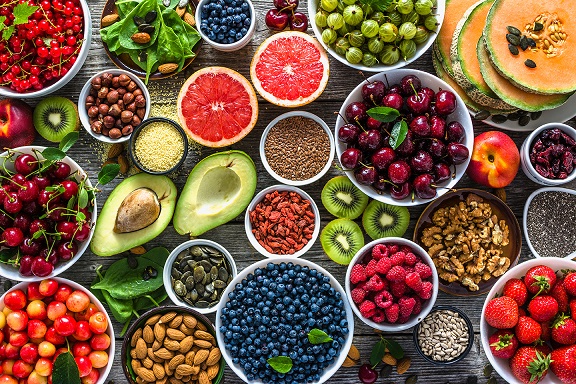
    Stopped by The Eat Whole Foods stall at St Albans Market today [1]. Great selection of beans, pulses, nuts, cereals, spices and other whole foods. Good to be able to support a local business.

    Some of the items I’ve bought recently from Eat Whole Foods …

    Walnuts
    A source of protein and Omega-3 fatty acids which are good for brain health and cell membranes.
    However, because vegans do not eat fish they are at risk of missing out on some forms of Omega-3

    There are three types of Omega-3 : ALA, DHA, EPA

    Walnuts and seeds only directly supply ALA.

    Algae is a good source of the other two types (It’s where oily fish get their Omega-3). There is now a growing supply of algae-derived products in the market [2]

    Pecan Nuts

    A soft nut with a great earthy flavour. A good source of protein, unsaturated fat which can lower bad cholesterol levels, and polyphenols which are good for the gut

    Engevita [3]
    A good source of Vitamin B12 and other important minerals. B12 is normally found in pasture-fed meat which is not part of a vegan diet, so vegans are at risk of B12 deficiency
    Engevita is a yeast derivative in the form of nutty/cheesy flakes

    Butter Beans
    High in protein and fibre. Great for adding to stews

    Dark Chocolate Covered Hazelnuts

    Exactly what it says on the pack: Delicious and satisfying.


    [1] https://www.eatwholefoods.co.uk

    [2] https://www.veganpieces.org/health/omega-3/

    [3] https://www.marigoldhealthfoods.co.uk/engevita

  • Recipe for health : A Review

    Recipe for health : A Review

    A report entitled, “Recipe for health: a plan to fix our broken food system” [1], was published in October by The House of Lords Food, Diet and Obesity Committee

    This Post highlights some of the findings of the report and considers how the report relates to plant based diets

    Although not going as far as recommending a vegan diet, many contributors to the report suggested that part of the solution to a broken food system is to ensure that our diets are high in fruits, vegetables, legumes, nuts, seeds and whole grains.

    This report provides further evidence for the benefits of plant based diets and should motivate government and business both to promote these diets and remove barriers to their uptake

    Health

    The report is largely motivated by increasing rates of obesity in the UK. It notes that two-thirds of adults are overweight and just under a third are living with obesity and that unhealthy diets are the primary driver of obesity

    This matters for both the individuals and for society

    After tobacco, diet-related risks now make the biggest contribution to years of life lost.

    It was suggested that the economic cost of overweight and obesity was £98 billion, including costs to the NHS and social care, lost productivity, workforce inactivity and welfare payments

    Ultra Processed Foods

    An entire chapter was given over to Ultra Processed Foods (UPF)

    Although there are various definitions of UPF, essentially these are foods which have gone through industrial processing and to which additives have been added such as flavours, colourants, sweeteners, thickeners and emulsifiers that mimic the properties of whole foods and encourage overconsumption.

    The role of UPFs together with animal based products was highlighted by Professor Mike Rayner [2] who mentioned “recent cohort research showing an association between higher UPF consumption and an increased risk of multimorbidity but only for certain categories of UPFs, i.e. animal-based processed products and artificially and sugar-sweetened beverages, but not ultra-processed breads and cereals or plant-based meat alternatives”

    “We have come to realise that to attain more healthy and sustainable diets we need to switch from animal based foods to plant based foods (whether they are processed or not). It is not just the processing of foods which makes them unhealthy and unsustainable but the raw materials from which they are manufactured as well”

    So another reason to avoid animal-based products

    The report noted that government and industry have an important part to play in promoting healthy food and making it available. But changes are slow and in many ways obstructed by companies with disproportionate economic and political power, and with the inherent conflict between profit-making and public health

    Henry Dimbleby [3] illustrated how so many resources are given to marketing calorie-dense products: “You can now buy 29 different forms of KitKat in this country. That kind of food has come to completely dominate our diet”

    Indeed. When I checked, even the vegan kitkat is 34% sugar, 30% fat + emulsifiers [4]. A “vegan” label doesn’t necessarily mean healthy!

    Sources of fresh food

    Professor Tim Spector [5] made an interesting point about the value of frozen and canned food:

    “It is a misconception that fresh vegetables are healthier than tinned or frozen ones. He pointed to findings showing that most frozen vegetables have as many or sometimes more nutrients than fresh ones, and said that cans of vegetables are often extremely nutritious”

    So what is to be done?

    As the report says, “There is scientific consensus that a diet high in fruits, vegetables, legumes, nuts, seeds and whole grains as well as fibre and low in foods high in fat, salt and sugar supports health and helps protect against diabetes, cardiovascular diseases, stroke and cancer.”

    Although Government and Business may not move as fast as we would like, we should continue to bring these facts to their attention at every opportunity.

    We can also educate and inform ourselves that not only is a plant based diet healthy, it is able to provide most of our requirements – there is certainly no need for meat, fish, eggs and dairy.

    In summary, a useful report with much to agree on regarding the harms caused by many Ultra Processed Foods, and the benefits of increasing plant based components of the diet. It shows that consumption of meat often correlates with bad health outcomes, but it fails to fully address the problems of meat and dairy

    [1] https://committees.parliament.uk/committee/698/food-diet-and-obesity-committee/news/203372/the-government-needs-a-plan-to-fix-our-broken-food-system-and-turn-the-tide-on-the-public-health-emergency

    [2] https://www.oxfordmartin.ox.ac.uk/people/professor-mike-rayner

    [3] https://en.wikipedia.org/wiki/Henry_Dimbleby

    [4] https://www.sainsburys.co.uk/gol-ui/product/kitkat-vegan-415g

    [5] https://youtu.be/uMv2TZUSPdg

  • Nutrition – Vitamin B2

    Nutrition – Vitamin B2

    Vitamin B2, also known as Riboflavin, is essential for  energy and antibody production, as well as normal cellular function, growth and development [1]

    The most dense sources of Riboflavin are meat and dairy products which vegans don’t consume. So vegans must take care to ensure that sufficient alternative sources are included in their diet

    Fortunately for vegans a balanced diet including fortified foods will provide enough Riboflavin without the use of supplements.

    While rare, a deficiency of riboflavin can create health problems that lead to hyperglycemia, hypertension, and diabetes mellitus. [2]

    Adults are recommended to take in about 1.3µg (micrograms) of Riboflavin daily [1] The required amounts differ by age.

    Note that Riboflavin is soluble in water, so more Riboflavin will be lost when preparing food by boiling compared to other cooking methods such as steaming or microwaving.

    The following are good sources for vegans

    Fortified soya milk 0.76µg per 200ml serving

    Fortified breakfast cereals

    Mushrooms per 100g  0.5µg

    Cooked Beet Greens, 1 cup, 0.4µg

    An 80g serving of tempeh contains 0.3µg of Riboflavin

    Cooked Soya beans, 100g, 0.3µg

    Spinach per 100g, 0.2µg

    Almonds, per 20g, 0.2µg

    Avocado 100g,  0.1µg

    A whole Avocado could contain three times as much as this

    Other sources

    Yeast extract (Marmite/Vegemite), nutritional yeast, quinoa [3]

    [1]  https://ods.od.nih.gov/factsheets/Riboflavin-HealthProfessional/#h8

    [2] https://pubmed.ncbi.nlm.nih.gov/27029320

    [3] https://www.veganfoodandliving.com/vegan-diet/vegan-nutrition/the-essential-b-vitamin-sources-for-vegans

  • Nutrition – Vitamin  B12

    Nutrition – Vitamin  B12

    Introduction

    Plant based diets do not contain meat dairy or fish products

    There are good reasons to exclude these products from your diet because of some of their adverse impacts on health.

    But they are also good sources of many essential nutrients, so vegans need to ensure that the lost nutrients are now obtained from other sources

    Fortunately most of the nutrients can be found in a balanced and varied vegan diet, but a few require a little more care to ensure that they are on the menu.

    It is important to note that there are exceptions where this may not be possible or requires knowledge beyond the scope of this article. For instance young children, pregnant and elderly people, those on special diets for health reasons, and countries where alternatives are not available. In which case medical advice should be sought before taking up a vegan diet.

    Some of the nutrients requiring attention are the following:

    • Vitamin  B12
    • riboflavin (vitamin  B2)
    • vitamin D
    • Niacin
    • Calcium
    • Iodine
    • Selenium
    • Iron
    • Zinc
    • Omega-3

    To start with …

    Vitamin  B12

    Vitamin B12 is essential for the formation of red blood cells, DNA, and the development and functioning of the brain and nervous system. The vitamin is crucial for maintaining overall health and well-being

    It cannot be overstated how important it is to have an adequate intake of vitamin  B12

    Vitamin B12 deficiency can occur in people with low or no consumption of animal foods. Symptoms can include irreversible nerve damage, pernicious anaemia and fatigue. These symptoms will not be immediate and can take several years to appear

    Most sources of vitamin  B12 are from animal products and therefore not suitable for vegans

    Nevertheless there are several ways that vegans can obtain Vitamin  B12 and include it as a regular part of their diet. These include dietary supplements, B12 fortified foods such as cereals or plant-based milks, and nutritional yeasts

    The estimated average requirement (EAR) is 2.0 μg/day (millionths of a gram per day). The recommended dietary allowance (RDA), also now known as Nutrient Reference Value (NRV) is 2.4 μg/day. The RDA is higher than the EAR in order to cover people with higher than average requirements

    Consuming about one microgram of B12 from fortified foods three times a day with a few hours in between will provide an adequate amount [1]

    Supplements

    There are many vegan supplements available containing B12, usually in combination with other nutrients.

    For example, The Vegan Society VEG1 can be taken daily [2]

    Fortified Cereals

    Typically these contain 100% NRV in 100g of cereal. Sometimes cereals are sweetened and may contain around 6g of sugar so check the sugar content as well as the B12

    Fortified Drinks

    Many Soya and Oat drinks are fortified with extra vitamins such as B12 and Calcium. It is useful to check the nutrition labels on the side of the packs for information on the amounts that have been added.

    Nutritional Yeast

    Nutritional yeasts usually come in the form of nutty/cheesy flakes.

    A yeast such as Engevita contains 88% NRV in a 5g serving (about two desert spoons)

    This can be added to soups, stews, and sauces [4]

    Marmite

    The infamous Marmite spread can be used to make a tasty toasty or added to sauces. A 4g teaspoon contains 38% RDA [5]

    Marmite is made from concentrated yeast extract, which is a by-product from brewing beer

    All Marmite products are certified vegan or are in the process of being certified

    One 8g serving contains 1.9 µg of B12, equivalent to 76% of an average adult’s daily reference intake

    I find 1 teaspoon, weighing in at 4g is usually enough to consume in one go, so that would be just over a third of daily requirements

    Note, Marmite also contains salt, but there is a reduce salt variety

    Blood Tests

    Blood tests can provide evidence of adequate levels of B12 in the body. Simple testing for B12 in the blood can be misleading if there are B12-similar molecules present from foods such as algae. Blood homocysteine testing is more reliable, with levels less than 10 micromol/litre being desirable [1]

    Conclusion

    It is essential that vegans obtain the recommended amounts of vitamin B12. Failure to do so can lead to serious health problems. Fortunately there are several good sources of B12. 

    For further information check the Vegan Society website [1] and Plant Based News [3]

    [1] https://www.vegansociety.com/resources/nutrition-and-health/nutrients/vitamin-b12/what-every-vegan-should-know-about-vitamin-b12

    [2] https://www.vegansociety.com/shop/veg-1-supplements/veg-1-shop-faqs

    [3] https://plantbasednews.org/lifestyle/vitamin-b12-folate-anemia-vegans-supplements/

    [4] https://www.marigoldhealthfoods.co.uk/engevita

    [5] https://www.marmite.co.uk/faq.html

  • Climate Breakdown – Time to Buckle Up

    Climate Breakdown – Time to Buckle Up

    A recent TED talk is sounding alarms. Johan Rockstrom gives an up-to-date scientific assessment of the state of the planet and explains what must be done to preserve Earth’s resilience to human pressure

    We are in for a rough ride and it’s time to buckle up. But there are changes we can make to avoid the worst outcomes. One of the changes we MUST make is to our diet and reduce meat consumption. He does not specify exactly how much, but in my opinion, if we are to take this call seriously, a vegan diet is the logical conclusion. Here’s the talk …

    [1] https://www.ted.com/talks/johan_rockstrom_the_tipping_points_of_climate_change_and_where_we_stand

  • How to Reduce your Climate Change Impact

    How to Reduce your Climate Change Impact

    A paper published last month in the scientific journal, Nature, makes a compelling argument for significantly reducing meat and dairy consumption in order to reduce Green House Gas emissions and our impact on the climate. Obviously, in my opinion, we can do better and eliminate them entirely from our diet.

    “Reducing climate change impacts from the global food system through diet shifts” [1] looked at 140 food products in 139 countries or areas to show that “within countries, consumer groups with higher expenditures generally cause more dietary emissions due to higher red meat and dairy intake”

    The study considers the effect of a global shift to the EAT-lancet planetary health diet [2] and shows that the present global annual dietary emissions would fall by 17%

    It is expected that poorer, underconsuming populations will increase their emmisions, but more than half (56.9%) of the global population, which is presently overconsuming, would save 32.4% of global emissions through diet shifts.

    The EAT-lancet diet aims to consume no more than 98 grams of red meat (pork, beef or lamb), 203 grams of poultry and 196 grams of fish per week.

    Here in the UK and in many countries there are now many nutritious plant-based products that can be substituted for meat, fish and dairy. In which case why stop at 98g of red meat per week?

    The urgency of the need to change to climate saving diets is highlighted in the paper : “Given the notable increase in emissions driven by food consumption despite efficiency gains, changing consumer lifestyles and choices are needed to mitigate climate change”

    The case for a vegan diet and lifestyle is stronger than ever

    [1] https://www.nature.com/articles/s41558-024-02084-1

    [2] https://eatforum.org/eat-lancet-commission/the-planetary-health-diet-and-you

  • Go Vegan to Help the Living World

    Go Vegan to Help the Living World

    Two observations to start …

    Firstly, Greenhouse Gas (GHG) emissions from industrial and agricultural activities are contributing to the heating of the planet and the consequent climate disaster that is unfolding.

    Secondly, livestock farming is a major emitter of Greenhouse Gases.

    So meat free and dairy free diets must be urgently taken up on a global scale if there is to be any chance of avoiding the worst outcomes of climate breakdown, biodiversity loss and extinction of species.

    But vegans are still only a small percentage of the population.

    Why is this?

    The reason may be a combination of facts and feelings. Perhaps vegans have to work harder to make the issues more widely known. And if they are known then we have to explain more clearly that although change is required, it is not cult-like and legalistic, but the individual is in control of a fulfilling, reasonable and science led lifestyle. And Passionately so!

    – o –

    The connection between climate breakdown and meat eating was highlighted in an article this week about the UK’s methane hotspots [1]. 

    Methane is a powerful GHG, producing over 80 times more warming than Carbon Dioxide when it is first emitted.

    The following quotes from the article show the urgent need to reduce Methane emissions be reducing meat consumption.

    “The UN Environment Programme says a 45% reduction in methane by 2030 would avoid nearly 0.3C of warming by 2045”

    “The analysis found a strong correlation between methane emissions and areas of the UK where high numbers of cattle are farmed for dairy or beef”

    “Farming, in particular, is a big contributor to the UK’s methane problem but does not report its figures”

    And if there is doubt about the scale of the problem …

    “… modelling has also been criticised by academics, who argue it underplays the amount of methane being released”

    In conclusion, the approaching climate breakdown caused by GHG emissions will be unimaginably bad for life on earth.

    Some of the consequences are already set in, but not all. There are steps we can take to avoid the worst outcomes if we act now

    Therefore it is not only desirable, but necessary that livestock farming must be phased out. Vegan lifestyles will need to be adopted across the world. Too radical? We are now at the point where this has to happen if life on earth as we know it is to survive in all its richness and diversity

    [1] https://www.theguardian.com/environment/article/2024/sep/03/uk-methane-hotspots-landfills-last-coalmine

  • Why Vegan? – For the Climate

    Why Vegan? – For the Climate

    A plant based diet is not an end in itself. So it’s useful to regularly remind myself…

    Why a plant based diet?

    One reason is to reduce my carbon footprint.

    Why do this?

    To avoid the global heating that has been forecast by scientists, and the consequences for the environment and the next generation.

    It’s being sorted out, isn’t it?

    There is some progress, but it is not fast enough, according to the science.

    You won’t make a difference

    Together, we can make a difference

    So how bad is the problem?

    Two images show that CO2 emissions continue to rise, and how little time there is left to reduce them.

    A chart from The Global Monitoring Laboratory [1] shows carbon dioxide concentration in the atmosphere (parts per million, ppm) , oscillating with the seasons, but on average it continues to steadily increase with no significant slow down up to the current date (Update August 2024: 423 ppm)

    Governments have set targets for net-zero CO2 by 2050, but in The Concept of Net Zero is a Dangerous Trap [2], the authors explain that this is a fairy tale designed to protect business as usual rather than the planet. Net-zero is a policy to continue with significant CO2 emissions balanced by unproven, currently unavailable technology.

    No one is suggesting zero emissions, but we need to aim for significantly reducing emissions

    A running counter from The Mercator Research Institute shows that at the current rate of emissions we will exceed the quota allowed for a temperature rise of 1.5 degrees by the end of 2029.

    The Carbon Clock is ticking

    The next generation will ask, What did we do to avoid this?

    References

    [1] https://www.esrl.noaa.gov/gmd/ccgg/trends
    [2] https://theconversation.com/climate-scientists-concept-of-net-zero-is-a-dangerous-trap-157368
    [3] https://www.mcc-berlin.net/en/research/co2-budget.html

  • Emotion, Awe and Reason

    Emotion, Awe and Reason

    As humans we are driven by emotion and reason. Both of these will contribute to our attitudes and actions when considering the man-made environmental and climate crisis that we face.

    Emotional responses include a love and enjoyment of what we have and a sadness, pain and nostalgia for what we are losing, perhaps felt with tears of sadness that its beauty is being destroyed and may never be recovered.

    It is important to feel about what we are losing when it comes to the environment – its awesome and inspiring beauty, richness and complexity. These feelings can sometimes drive our concerns more forcefully than anything else.

    It has been said that Nostalgia is primarily motivating environmentalism. But Environmentalism is not only based on a subjective and emotional experience. Another, perhaps more important basis is the extensive wide ranging and well researched science on the subject. This science is clear that Business As Usual will see an unsustainable and unliveable future.

    The world we are heading into is one with temperatures soaring past 2 degrees C above pre-industrial levels leading to huge risks for civilization and possibly humanity itself.

    We long for forests, fresh water, and thriving oceans not just because they are beautiful and inspiring but because we literally cannot live without them.

    Emotion can be a temporary feeling. We eventually move on. The reasoning underlying Environmentalism is about survival. When the issues are understood we must stay and act.

    “The facts alone justify immediate and drastic action … The impacts of climate change, no doubt constitute an existential threat if we fail to act. But we can act. Our fragile moment can still be preserved” [1]

    [1] https://www.hive.co.uk/Product/Michael-Mann/Our-Fragile-Moment–how-lessons-from-the-Earths-past-can-/29103193
    Our Fragile Moment, Michael Mann, 2023